
The right kitchen knife can completely change how we cook. A well-balanced, Japanese handmade knife makes prep faster and safer for everyday meals.
In our experience, choosing a high-quality knife is one of the most important steps in building a reliable kitchen. Japanese kitchen knives are known for their careful craftsmanship. We can find options for home cooks and professionals at many price points.
That is why we have carefully selected, compared, and reviewed the most talked-about Japanese handmade knives of 2025. In this guide, we share the blades we would actually use in our own kitchen, so we can all find a reliable knife in just a few minutes.
Let’s dive in.
1. Our Japanese Handmade Knives Top Picks

Yoshihiro VG10 Hammered Damascus Gyuto
Sharp, balanced, and versatile.
Masamoto Sohonten VG Gyuto
Reliable workhorse for busy kitchens.
Misono UX10 Gyuto
Stays sharp and feels precise.
| Product | Click to Purchase | Review | Score |
|---|---|---|---|
| 🎖️4.Enso HD Chef’s Knife | Amazon Amazon JP | Read Review → | ★ 4.25 |
| 5.Yaxell Mon Chef’s Knife | Amazon Amazon JP Rakuten | Read Review → | ★ 4.10 |
| 6.Sakai Takayuki VG10 Hammered Gyuto | Amazon Amazon JP Rakuten | Read Review → | ★ 4.00 |
| 7.Honmamon Aogami Kurouchi Gyuto | Amazon Amazon JP Rakuten | Read Review → | ★ 4.00 |
2. How Do We Choose the Best Japanese Handmade Knives?
We started by looking at many of the most talked-about Japanese handmade knives that are popular in Japan. From there, we narrowed the list down to the top 7 knives we would actually want to use personally.
We did not rely only on specs or other reviews. We cooked with these knives, checked how they felt, and watched their performance too. From our perspective, a knife is only worth recommending if it feels safe, cuts cleanly, and makes daily usage easier.
2.1 How We Reviewed the Best Japanese Handmade Knives
When testing, we focused on these key points that matter most in real cooking:
- Cutting Performance: How cleanly and smoothly the knife sliced vegetables, meat, and fish in everyday tasks.
- Edge Retention: How long the blade stayed sharp with normal home use before needing a touch-up on a stone.
- Balance and Weight: How stable the knife felt in the hand and whether we could work for a long time without fatigue.
- Steel and Heat Treatment: Type of steel, hardness, resistance to chipping, and how well it responded to sharpening.
- Handle Comfort: How secure and natural the handle or Western handle felt in different hand sizes and grips.
- Fit and Finish: Spine and choil smoothing, grind consistency, and overall attention to detail from the maker.
- Maintenance and Care: How easy it was to clean, dry, and maintain the blade, especially for reactive carbon steels.
- Value and Reputation in Japan: Price compared to performance, plus how well-known and trusted the brand is among Japanese knife users.
In our experience, the best Japanese kitchen knives were the ones we kept reaching for day after day because they made cutting feel simple.
2.2 Our Methodology
We spent several days cooking with each knife in real home-style conditions. We used them for regular tasks: chopping onions and cabbage, slicing sashimi, trimming meat, and cutting fruit. This helped us see how each handmade Japanese knife behaved beyond a quick first impression.
We tested on different cutting boards too to understand how the edge held up. We paid close attention to micro-chipping, wedging in hard vegetables, and whether the blade stuck too much to ingredients.
Our team shared detailed notes after every cooking session. From what we have seen, good heat treatment and careful grinding make a bigger difference than just the steel name alone.
After this hands-on testing and group discussion, we selected the best Japanese handmade knives of 2025 that offer clear benefits for home cooks and food lovers. Our final picks cover a range of styles so we can all choose a blade that fits how we actually cook.
3. The 7 Best Japanese Handmade Knives of 2025 – Tested and Reviewed
Choosing the right Japanese knife can feel confusing, but don’t worry. We have done the heavy work and and ranked the 7 best Japanese handmade knives of 2025 that we think are worth buying.
Let’s check them one by one:
No.1. Yoshihiro VG10 Hammered Damascus Gyuto
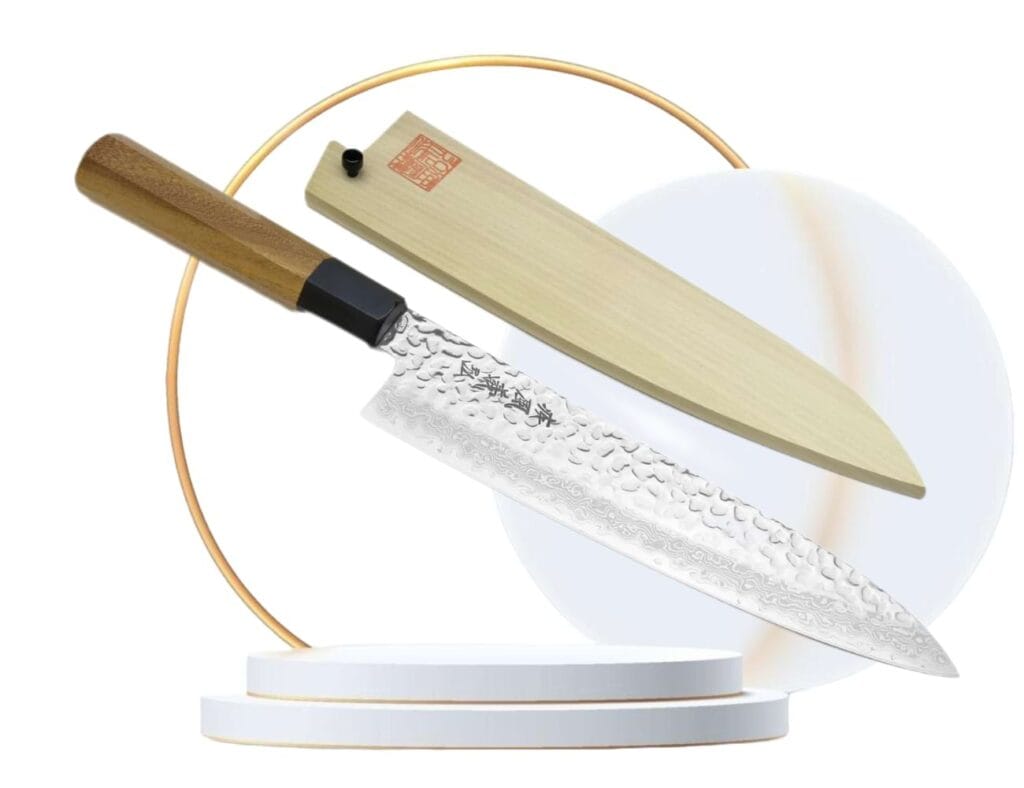
Yoshihiro VG10 Hammered Damascus Gyuto is a 210mm Japanese gyuto with a VG10 stainless core wrapped in 46-layer hammered Damascus steel. It has a double-bevel edge around 15°, so it can handle meat, fish, and vegetables with one main knife.
The octagonal wooden handle is light and ergonomic, and the blade is hardened to about HRC 60 for long edge life. It comes with a magnolia wood saya and needs hand washing, careful drying, and water-stone sharpening while avoiding bones, shells, and frozen foods.
Blade length: 210mm (8.25″) | Best for: users wanting real Japanese Damascus gyuto for serious cooking | Key materials: VG10 stainless core, 46-layer hammered Damascus, wooden handle, wooden saya
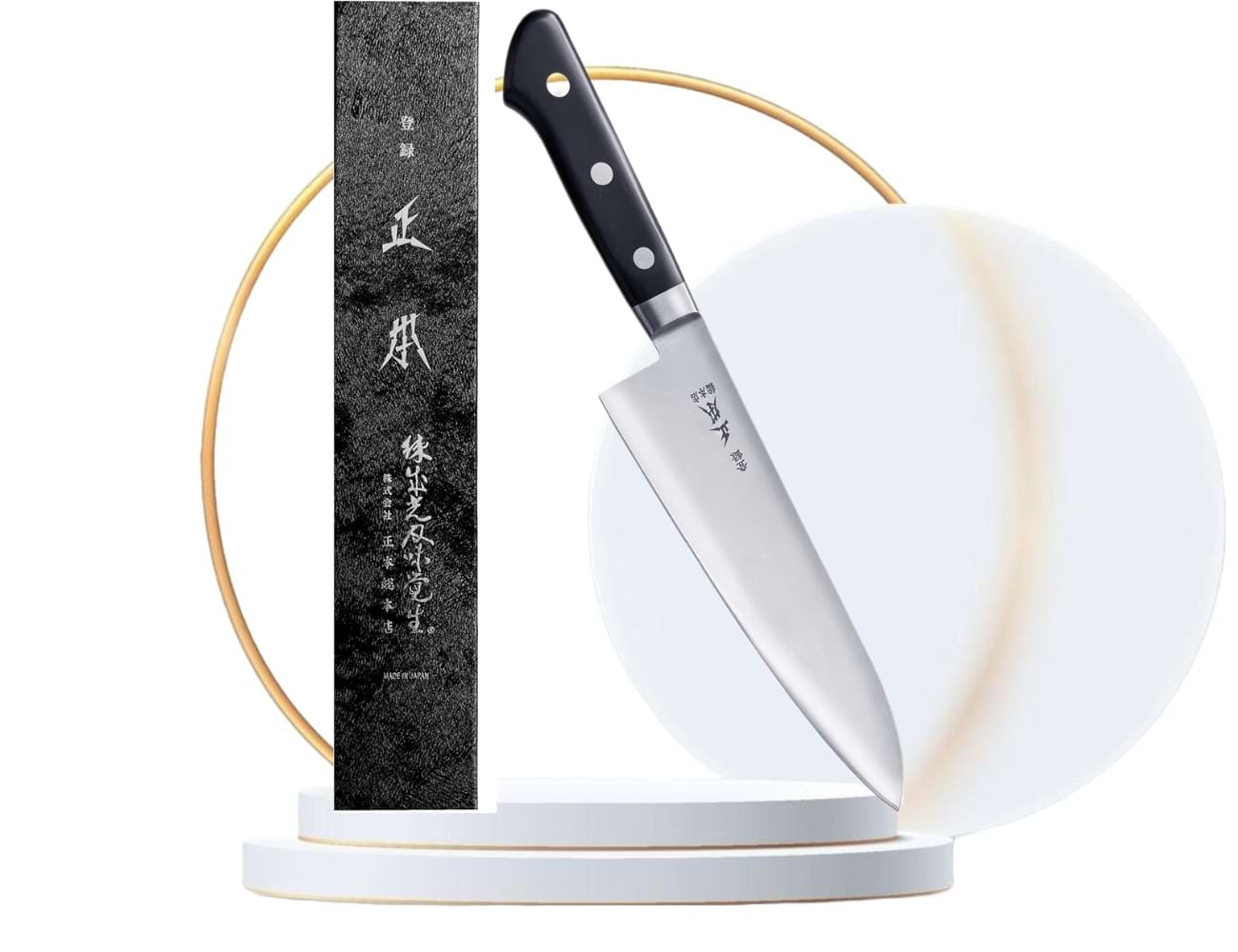
No.2. Masamoto Sohonten VG Gyuto
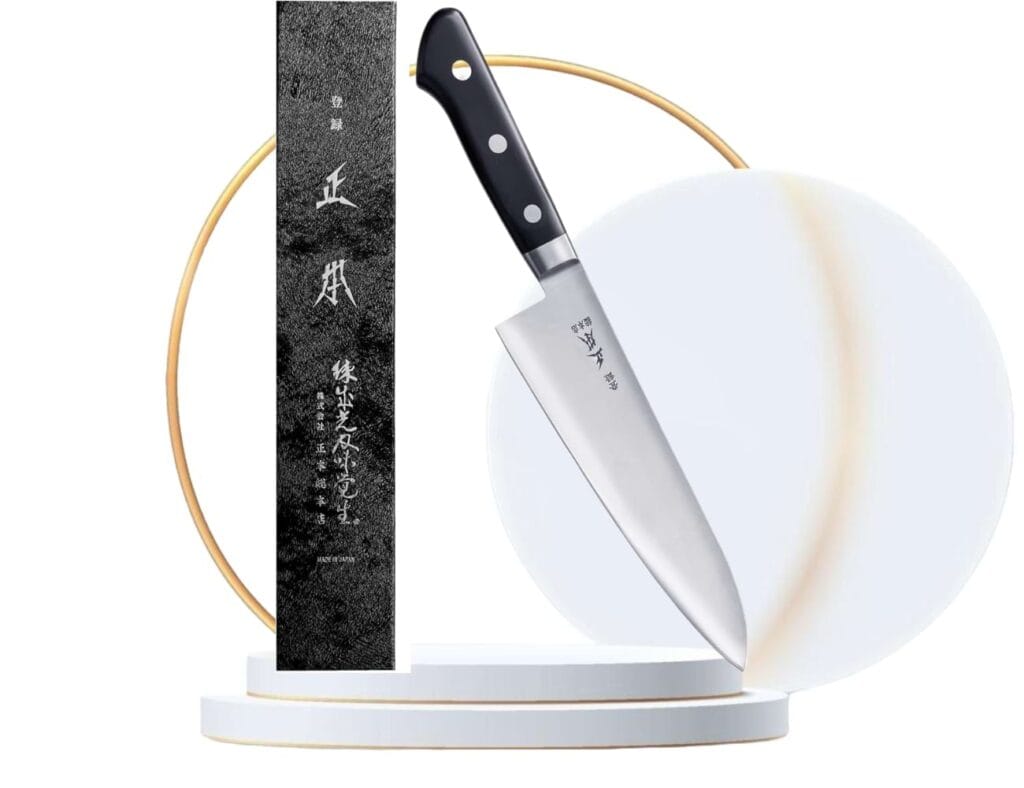
Masamoto Sohonten VG Gyuto is a 240mm double-bevel stainless gyuto for multipurpose work. It is meant for cutting steak, beef, pork, chicken, fish, and vegetables with one knife.
The blade uses high-grade stain-resistant stainless steel (ハイパーモリブデンバナジウム) with a curved plain edge and bolster. The POM resin handle has moderate weight and is easier to maintain than carbon steel when we wipe and store it dry.
Blade length: 240mm (9.4″) | Blade material: stainless steel (hyper molybdenum vanadium) | Handle: POM resin | Hardness: HRC 58–59
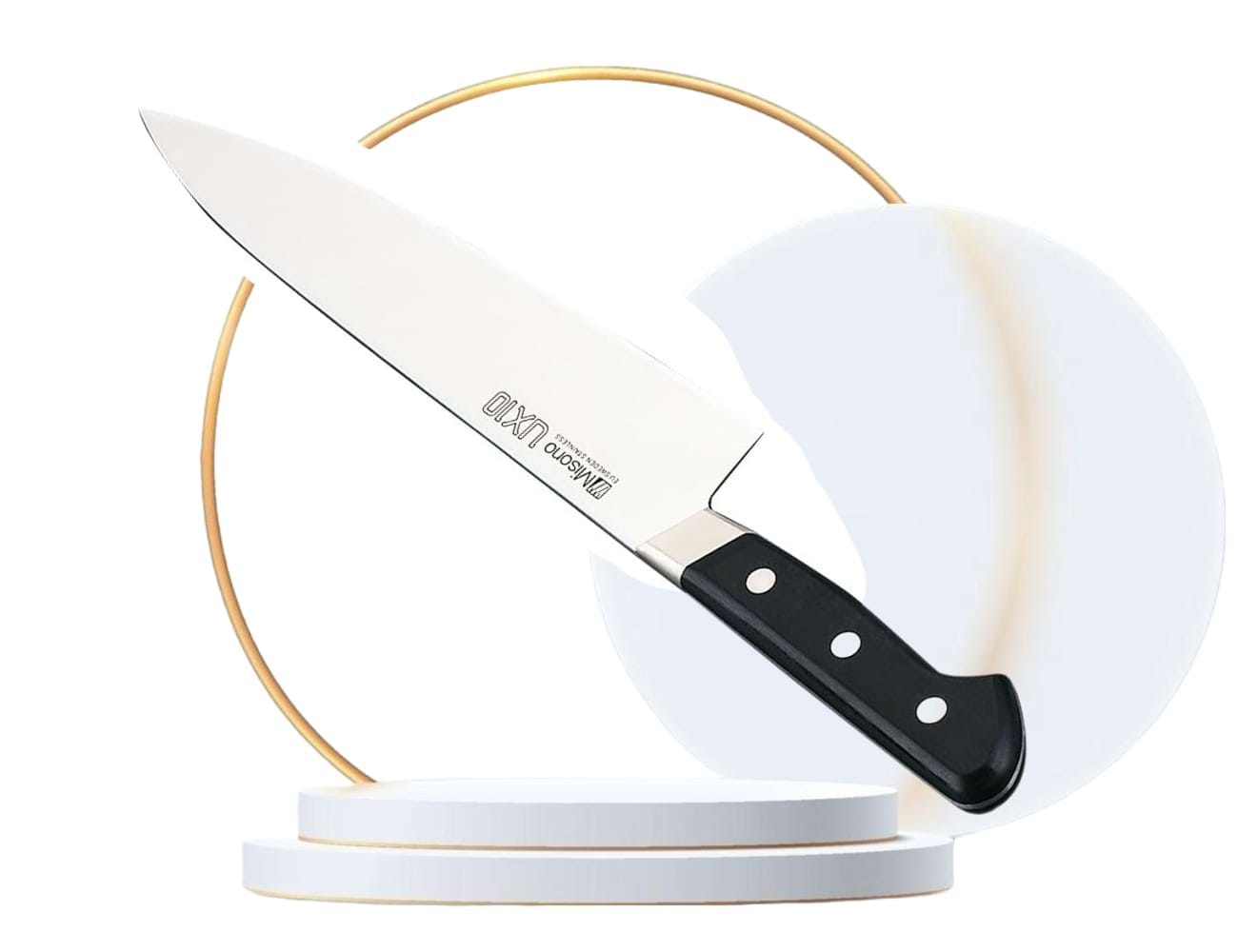
No.3. Misono UX10 Gyuto
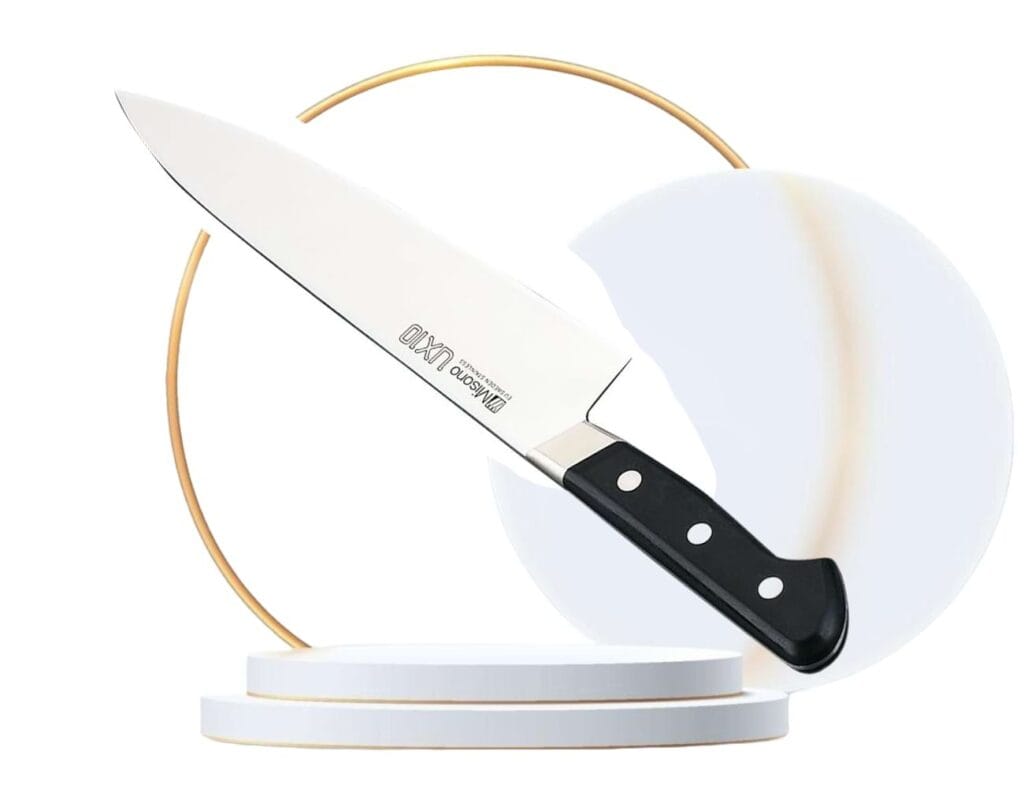
Misono UX10 Gyuto is the flagship stainless gyuto from Misono. It uses special steel from Europe and is made to cut like a carbon-steel knife but stay easy to care for.
This series is often called the high point of Misono’s stainless line. Many users in Japan choose it as a long-term main knife for serious home and professional cooking.
Blade length: 21cm | Weight: 160g | Blade material: high-purity special stainless steel | Handle: black reinforced wood
No.4. Enso HD Chef’s Knife
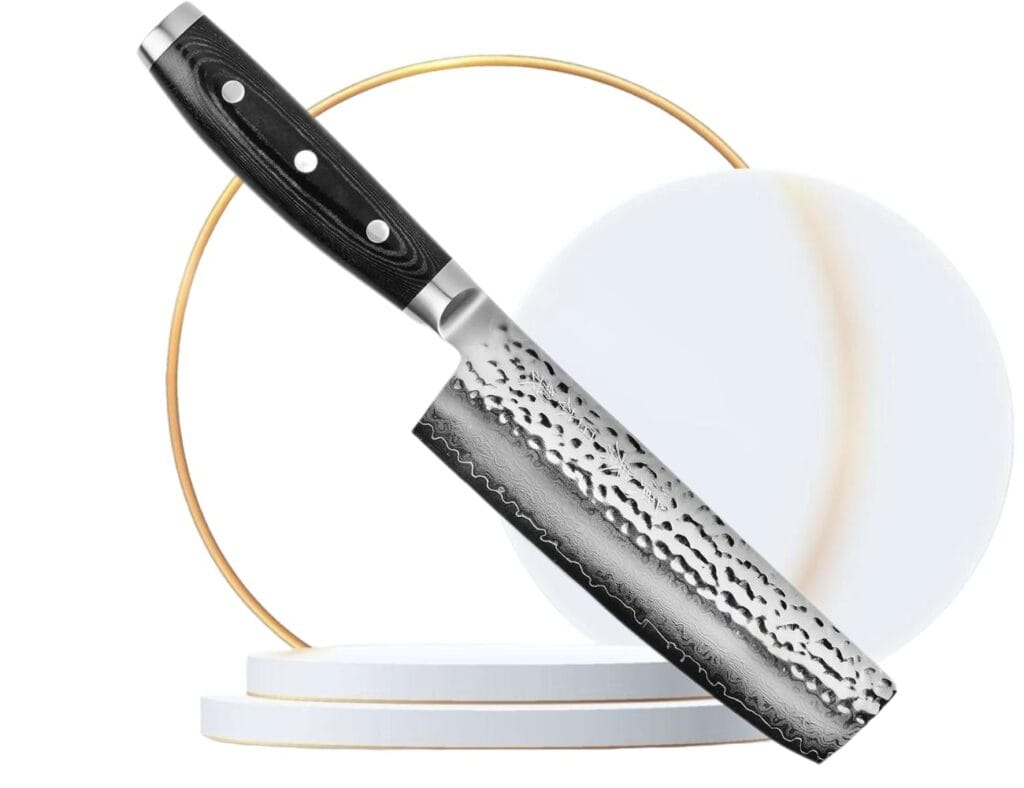
Enso HD Chef’s Knife is a Japanese vegetable knife with a straight edge made for fast, clean chopping. It uses a VG-10 steel cutting core with a hammered Damascus finish to slice through all kinds of vegetables for stir-fries and salads.
This series combines traditional knife craft with modern technology and comes with a double-bevel edge for both right- and left-handed use. The black Micarta-style handle is built to feel like wood but resist cracking, and the knife is covered by a lifetime guarantee.
Blade length: 6.5″ | Blade material: VG-10 core, 37-layer stainless Damascus | Edge: double bevel | Handle: Micarta-style wood | Warranty: lifetime
No.5. Yaxell Mon Chef’s Knife
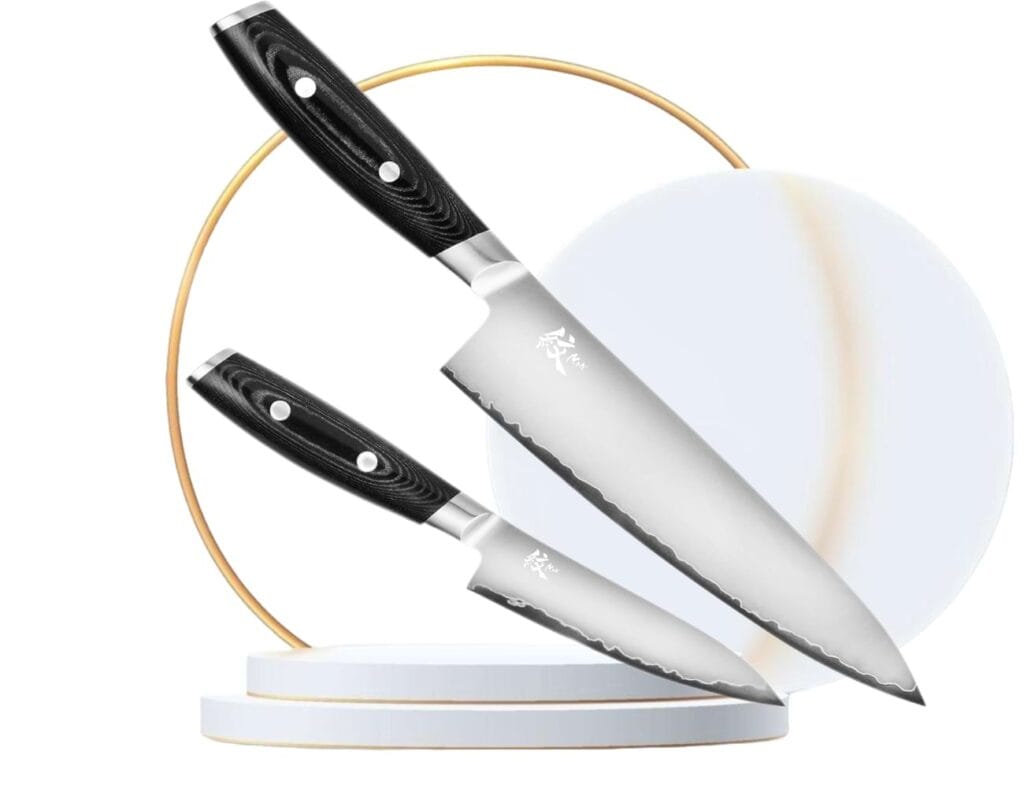
Yaxell Mon Chef’s Knife is a two-knife combo with a chef’s knife and a utility prep knife. We see it as a simple way to cover most daily kitchen tasks.
The series uses a VG10 stainless core in a three-layer build, with a sandblasted blade and sword-like wave line. The black Micarta-style handle is made to last for many years.
Blade length: 8″ chef, 4.75″ utility | Best for: everyday fruit, vegetable prep, trimming meat and cheese | Key materials: 3-layer Japanese VG10 stainless core, stainless cladding, black linen-canvas Micarta handle, 18/10 stainless end cap
No.6. Sakai Takayuki VG10 Hammered Gyuto
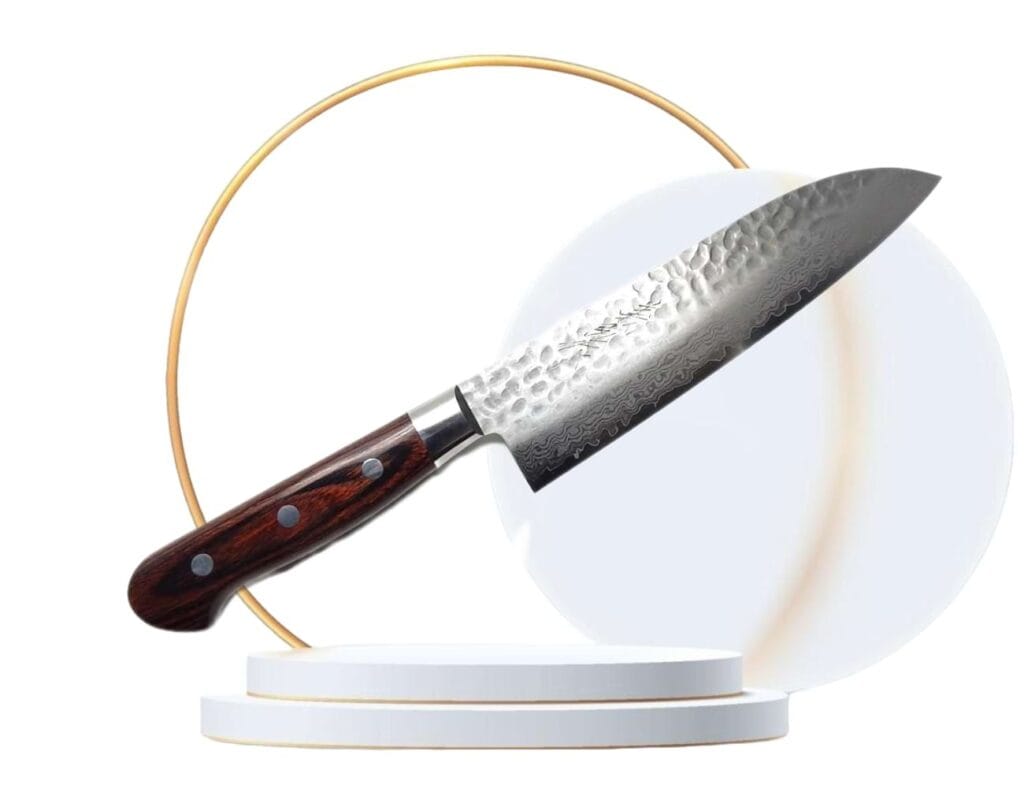
This Sakai Takayuki VG10 Hammered Gyuto is a compact Japanese chef’s knife for general kitchen work. It sits in the same family as their other higher-end hammered blades.
The knife is sold as a premium piece with a traditional look and matching handle, aimed at people who want one main Japanese-style prep knife.
Blade length: 180mm | Best for: everyday Japanese chef-style santoku work | Key features: VG-10 hammered Damascus blade, mahogany handle, forged construction
No.7. Honmamon Aogami Kurouchi Gyuto
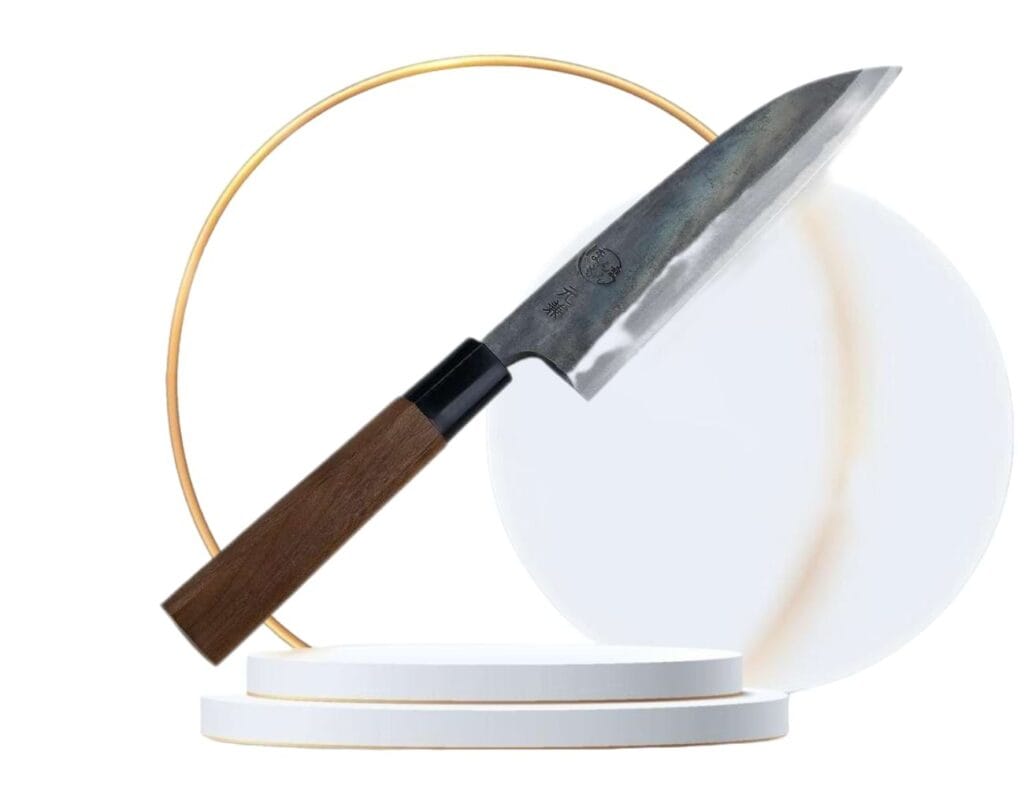
This Honmamon Aogami Kurouchi Gyuto is a compact funayuki-style knife for all-round prep. It uses Hitachi Yasugi with a forged black-steel finish for a traditional look and strong cutting feel.
The blade is carefully hammered and shaped so the surface is smooth with few bumps and the edge line stays straight and clean. It is a light double-bevel knife that feels easy to move on the board.
Blade length: 165mm | Blade material: Hitachi Yasugi Aogami #1 alloy steel, forged black finish | Edge: double bevel | Approx. weight: 115g | Style: Tosa-type funayuki kitchen knife
4. How to Choose the Best Japanese Handmade Knives For Every Use
We get the best results when we match the knife to how we actually cook. Here are simple picks for different needs.
- Best Japanese Knife for Everyday Home Cooking: We recommend the Yoshihiro VG10 Hammered Damascus Gyuto because it is sharp, balanced, and easy to use for meat, fish, and vegetables.
- Best Japanese Knife for Professional Kitchen Work: The Masamoto Sohonten VG Gyuto is ideal because it has a trusted profile, good weight, and is made for long shifts.
- Best Japanese Knife for Low-Maintenance Performance: We recommend the Misono UX10 Gyuto because it stays sharp for a long time and is easy to care for with simple hand washing.
- Best Japanese Knife Set for Small Kitchens: The Yaxell Mon Chef’s Knife set is our choice because the 8-inch chef and 4.75-inch utility knife handle prep from herbs to meat in a compact setup.
- Best Japanese Knife for Carbon Steel Fans: The Honmamon Aogami Kurouchi Gyuto is ideal because the blue paper steel gives a very strong bite and develops a classic patina over time.
Still looking for the right Japanese knife?
Explore more rankings, buying guides and related Japanese knife articles below:
5. FAQ
What is a Japanese handmade knife?
Japanese handmade knife is a kitchen knife forged by a skilled Japanese craftsman, usually in small workshops using traditional methods. The blades are often thinner and harder than Western knives, which gives very sharp, precise cuts and excellent edge retention.
Are Japanese handmade knives worth the money?
For us, they are worth it if we cook often and care about control, clean cuts, and long-term performance. The harder steel and fine geometry give sharper edges and better food presentation, but they do need more careful use and maintenance than cheaper mass-made knives.
How are Japanese handmade knives different from German or Western knives?
Japanese handmade knives are usually lighter, thinner, and made from harder steel, so they stay sharper longer but can chip if abused. German knives tend to be thicker, softer, and tougher, better for heavy chopping and rough use.
Are Japanese handmade knives good for beginners and home cooks?
Yes, as long as we choose a simple all-purpose shape like a gyuto or santoku and avoid very brittle single-bevel blades at first. Many makers recommend 180–210 mm gyuto or santoku for home cooking because they can handle most tasks with one knife.
How do we care for a Japanese handmade knife?
We wash it by hand, dry it right away, and never leave it in the sink or dishwasher. We use a soft wooden or plastic board, avoid cutting bones or frozen food, and sharpen with a whetstone when the edge feels dull; carbon steel blades may also need a light coat of oil to prevent rust.
Which Japanese handmade knife should we buy first?
Most people start with a gyuto (Japanese chef’s knife) because it can cut meat, fish, and vegetables in one tool. A 180–210 mm stainless or semi-stainless gyuto is a safe first choice that balances sharpness, versatility, and easier maintenance for everyday cooking.
Table of Contents